What We Really Want: Conversations About Connection
FOLLOW/SUBSCRIBE to download new episodes as they release!
If it's true that "...the opposite of addiction is not sobriety...the opposite of addiction is connection," there are lots of people who need to discover what true, healthy connection looks like. Whether the struggle is with addiction, toxic relationship dynamics, or something else, we've all tried to meet our needs in unhealthy ways. Way too often, the things we run to for comfort leave us feeling even more disconnected and alone than before.
Through conversations about the many ways we can connect, we offer an invitation to discover and move toward what we really want, so we can live the lives we were created for.
Awaken (awakenrecovery.com) helps men and women whose lives have been wrecked by unwanted/addictive sexual behaviors and sexual betrayal trauma. We hope the podcast will help not only those struggling sexually, but anyone who seeks healthier ways of finding connection.
What We Really Want: Conversations About Connection
76 | Sathiya Sam: Maybe This is a Matter of the Heart
Use Left/Right to seek, Home/End to jump to start or end. Hold shift to jump forward or backward.
"Send us a message! (questions, feedback, etc.)"
For men who want to recover from porn addiction, what does the relationship between doing and understanding need to look like? How much of recovery and healing involves developing new skills vs. deep heart change?
These are important questions, and ones our guest has worked through with thousands of men. Sathiya Sam is an author, speaker, host of the "Man Within" podcast, and founder of coaching community Deep Clean. Sathiya seeks to utilize timeless principles and cutting-edge science to help guide his clients through in-depth transformational processes.
Because it's so easy for recovering people to have an unhealthy relationship even with the concept of sobriety, our conversation is timely and important.
Sathiya lives in Canada with his wife Shaloma and their kids.
#sathiyasam #deepclean #manwithin #manwithinpodcast #recovery #healing #coaching #sexaddiction #sexualaddiction #pornaddiction #sobriety #grace #gospel #healing #awaken #awakenrecovery
Deep Clean website
Man Within podcast
Sathiya's Instagram
Awaken website
Roots Retreat Men's Intensive
Roots Retreat Women's Workshop
Awaken Men & Women's support meeting info (including virtual)
Simple Advice And Hidden Shame
Sathiya SamI think when the messaging is so simple and the attitude is this is a simple thing, just quit it. When you can't, you naturally by default assume something must be fundamentally wrong with you.
AnnouncerWelcome to What We Really Want Conversations about Connection. Settle in and get ready for a great conversation. Let's talk about what we really want.
GregHey everybody, welcome back to What We Really Want. Today is episode 76. It's called Maybe This Is a Matter of the Heart. And our guest is Sathiya Sam. This is going to be a short intro because I want to get right to the conversation and let you hear it. Sathiya is a friend. I haven't ever met him in person, but we have gotten to know each other over the last few years because we work in the same space, helping people find freedom from pornography and other forms of broken sexual behavior. Sathiya is the founder of Deep Clean, which is a coaching ministry that helps people find freedom from pornography. He is the host of the Man Within podcast. I have been grateful to get to be a guest on that show in the past. And this is just going to be two guys who have a passion for helping people walk away from broken, unhealthy, life-stealing behaviors, and to find true freedom and to be able to find the life that we were really made for. So without further ado, this is episode 76. Our guest Sathiya Sam. It is called Maybe This Is a Matter of the Heart. Can't wait for you to hear it. The conversation starts right
Life Updates And Calling
Gregnow. Anything fun you guys have been up to lately?
Sathiya SamOh my goodness, dude. You the week I just had, I I could spend an hour talking about that. We moved house. We celebrated my son's first birthday, my secondborn. So we decided to host it at our new place. Uh, because we were supposed to do it outdoors, the weather was bad. So just building furniture like crazy, trying to get the house in order. And then we're renting out the place that we used to live in, and and then the basement flooded like three days before. We had like we had like historical rainfall. We had two storms that together equated for I think six months of rainfall that's typical to our region. So we're we were just not built, do not have the infrastructure for that kind of rain.
GregSo you're in are you're you're in Canada, correct?
Sathiya SamI am, yeah. I'm right by the Buffalo Niagara border, about an hour from Toronto. We we're kind of sandwiched by lakes, the like Lake Ontario and Lake Erie. So we do get like inclement weather every once in a while, but never anything like this. So anyway.
GregWhen I was 15, I went to Niagara for the first time on a trip with my aunt and my cousin. And we went through and we went around the Great Lakes and we spent the night in Cornwall.
Sathiya SamOh, get out of here. Is that anywhere close to where you live? Not really, no. I can't believe I can't believe you'd even know where Cornwall is, to be honest. Yeah.
GregIt was I think it's pretty much just on the north end of the lakes, but mosquitoes the size of house cats is what I remember.
Sathiya SamOh, yeah, yeah. Yeah. On the lakes, the mosquitoes are crazy. That the house that I that we lived in previously was about a three-minute walk from from the beach from uh from Lake Ontario, and they they call them Mayflies, not like huge mosquitoes, but just the flies. And literally in May, you just you honestly, it's it's like walking through a wall of of bugs. So anyway, yeah.
GregIt's my fault that we got on that asking about Canada.
Sathiya SamNo, no, you're good, you're good. But yeah, it's it's been really eventful, but you know what? It's it's one of those, like Shaloma and my wife, we were just talking about it. Like we've never, we've never like taken risks or stepped deeper into things God's calling us to that feel, you know, ambitious without something along the way. Like it just it it never, it's never linear. There's always going to be some hoops and some stumbles along the way. And so this is just another thing for us to figure out and to glorify God through it all while we do it.
GregThere you go. Well, Sathiya Sam, we have known each other for a while now. You've been kind enough to have me on your show, Unleashing the Man Within. And now we finally got a chance for you to be on what we really want. So I'm I'm so thankful that you're here today. It's great to see you.
Sathiya SamYeah, it's been a long time in the making, Greg. Thanks for having me.
GregYeah, it's it's really special. And I've had this conversation with multiple people who kind of work in the space that you and I, where we spend a lot of our time, that one of the toughest things about it is just when it feels lonely. And sometimes it just feels like you're kind of lone rangering it. And so to be able to branch out and meet other people who have the same experiences and the same calling and are working with the same types of people walking through really dark times is necessary. I mean, it's it's it's really uh positively impactful. And it's been a pleasure getting to know you and having some overlap with our you know mutual friend Sean Bonato. But as we are getting ready to get started, I'm gonna ask you probably about the only scripted question we're gonna have in this conversation that we ask all of our guests. And that's Cathya, what do you really want out of our conversation?
Sathiya SamYou know what? It's funny you mentioned just the loneliness factor because when I when I thought about just spending an hour with you, you and I text and we've been able to help each other out along the way. But I just thought, man, it'd be so cool to just connect with Greg a little bit more deeply. And for me, that's what I want out of this conversation. I'm excited to hang out with you, man. And I hope we get to connect and get to know each other a little bit more. And obviously, I I hope we can bring some value to your audience in the process while we do that.
GregI mean, I think we bring something to them by doing that, honestly. Yeah. Because if if sexual addiction or compulsion is an intimacy disorder, which I think we both understand it to be, then part of part of the struggle is wanting to connect, but not really knowing how to do it in a healthy way. And so we always hope that these conversations are gonna be just giving people inspiration, ideas, you know, just a little bit of, you know, hey, just listen to this, be a fly on the wall. And so, yeah, I really, I would love, love to have that happen too. Well, man, you already mentioned about one of
Arranged Marriage And Rethinking Love
Gregyour kids just turning one. Tell me a little bit about you and your family. We're gonna have plenty of time to get to the work that you do, but help people who don't already know you get to know you a little bit.
Sathiya SamYeah, I am the quintessential pastor's kid. My grandpa was also a pastor, and his dad, my great-grandfather, was also a pastor. So grew up with I don't think I knew that about you.
GregThat's cool.
Sathiya SamThere you go. Yeah. So, yeah, so technically I'm a fourth generation pastor because I pastored for years, and that's a huge part of my story, which I'll get to in a minute. The other element is that I am the product of Indian immigrants. And so my dad immigrated to Canada as a teenager, a late teenager, just entering his 20s. He had an arranged marriage to my mother, and so they he went back to India for a summer. He said, Mom and dad, help help me find a wife. I don't know if you're familiar with that. Are you familiar with that process at all? Have you watched any of the matchmaking videos or that kind of thing?
GregA little bit. But yeah, feel free to tell us whatever you want to about how that worked.
Sathiya SamWell, well, I won't go too far into it, but we're talking about intimacy disorders and the whole kind of love complex that our our culture seems to have. So my dad, my dad was 24. He went back to India, he had six weeks, and in that time they needed to find a wife. And the way it worked back then is you had a marriage broker. So my my grandfather is very well connected in India, and so he knew tons of marriage brokers. You know, he pastored a church of a couple thousand people. And so he he found a marriage broker, they take a portfolio of your son or daughter, and then they kind of start to craft a profile of what the ideal match would look like. And the big thing with my dad's profile is that he already lived in Canada. So whoever he got married to, you know, they had to be willing to leave India, which back then was a really big deal. You generally didn't leave India. So my mom was born in Malaysia, even though she's Indian, and so she was the second ranking applicant. And so the first, the first ranking applicant, the families had some disagreement on something, didn't work out. The second was my mom, so the families met. And this is again, it's not it's not my mom and my dad met, it's the families meet together. My dad had negotiated to have about 10 minutes to just speak with my mom. 10 minutes, that's it. And usually you don't even get that, usually you don't get that one-on-one time. So that was like a negotiated thing in this whole ordeal. And the way my dad tells the story is he asked her two questions. Are you okay moving to Canada and can you cook? And she she told the truth about one and she lied about the other. And uh, and then she he always says, I'll let you figure out which one. But uh, she did move to Canada, so that should that should narrow it down. And my dad at the time was pastoring in central Canada. So uh, for Americans listening, think of North Dakota, just north of North Dakota on the Canadian border, is a province called Saskatchewan. And so my mom, who grew up in Malaysia, tropical paradise, then lived in India as a teenager and into her 20s, immigrated to Canada in February 1984. Minus 30 weather. She's never seen snow before, has never seen a negative temperature. And that's how they got started. Now, a long story, all but all to say is my dad often says, you know, we get love all wrong here in the Western culture. We think that you you fall in love, but if you can fall in love, you can also fall out of love. And their experience of love was that first you make a choice, you make a values-based decision on, you know, in this case, it's it's faith, it's culture, there's different elements. And then he said he remembers about two years into his marriage, that that was the first time he really realized, like, wow, I am like, I am deeply, deeply in love with this woman. Yeah, you know, they got engaged based off a 10-minute conversation. I and I left that out. They, after that conversation, they they agreed to to be engaged, and 10 days later they were married. So it happened very quickly. Wow. And so, so yeah, so I think it it gives you a little bit of different perspective on what love could really look like. And obviously, if you if you think about the work we do helping guys quit pornography and unwanted sexual behavior, that reframing of what love really is is very much at the core of it all.
GregSo you know, that's that's really interesting, just before you go any further, to think about without endorsing one way or the other, you know, just to say that this is the this was the the way your parents came together. That's the story. The thing that's striking me is how often I feel like I'm kind of a victim or a slave to my situation. And and there really is, you know, whatever it is. And you could make an argument whether that was best or worst or somewhere in between, but like it it's not a guarantee in either direction. It's not a guarantee of success or failure, nor is any culture's approach to people coming together.
Sathiya SamWell, and that yeah, I think what's interesting about that is is then, and again, this would be a bit unique to my story, but people always ask me when they heard my parents' story, oh, are you gonna get an arranged marriage? You know, are you gonna do that thing too? And I was, I mean, you know, we we grew up in in Western culture, so I don't think that was ever really gonna be a thing. But it is interesting when you think about the things that you learn from your parents that you whether you do it the same way as them or not, the things you learn that you are gonna take in, and there's so much I've learned from their marriage. Um, and then there's tons that I did differently. I I remember when my wife Shaloma and I were getting serious, and I had asked my mom for some advice, and she said, you know what? I never dated, so I honestly don't know what to say. Right. You know, just straight up because she just said that I don't know that experience. I like I've I've seen other people date, they they were pastors for years, they counseled people through, but she was just kind of saying, I don't think I'm the person to really be talking about dating stuff because I don't have that experience.
GregMan, that's really something that that does bring up one more question. You said you grew up in Western culture, so you and Shaloma didn't come together that way. For people of Indian heritage who do grow up in the West, how often does it happen where they go ahead and and even though they're live not living in India, follow those traditions? Is it pretty rare?
Sathiya SamIt's pretty rare. Yeah, it'd be it'd be, I would guess maybe one to two percent of people will do that and go back. And usually it's extraneous circumstances, like maybe they're a bit older, they're having a hard time meeting people, or like that kind of thing. Yeah. I think by default, when you grow up here, you yeah, you you absorb the culture, you know. And again, like there's so many pros of an arranged marriage, but I think I think given the choice, most people would rather choose their partner. So I think, yeah, I think presented with that option, most of us are gonna take that nine times out of ten at least.
GregWell, it's cool to hear that part of your story and your parents' story. Something that you and I have in common is that both of us have experience in pastoral ministry, but also we've got experience in the kind of thing that you would say, well, how do you go to how do you go into the kind of work that you're doing now? And so both of us have some firsthand experience there. I wonder if you'd be open to sharing a little bit about that part of your story.
Sathiya SamYeah. So we'll go back to Saskatchewan. I'm an 11-year-old kid in the computer lab of my Christian school. And my buddy came up to me and he
First Exposure And Compulsion Cycle
Sathiya Samwas like, Hey, check this is again computer labs, just to give you an idea of when this was, like in 2001. And, you know, he kind of gives me a little like, hey, my my soccer, he was he played really high-level soccer for an 11-year-old. And he's like, Hey, one of my one of my teammates told me to check out this website. So he gives me the URL and I punch it in. Um, and sure enough, it was a it was a porn site. And I had grown up very sheltered. I had very little exposure to anything like this. I had I had never seen anything like that before. So I was more disturbed by what I saw than anything else. It wasn't like I was uh addicted overnight, but it just planted a little seed.
GregYeah.
Sathiya SamAnd then that seed started to blossom in high school. Then, you know, I was in an interesting peer group of, again, still in Christian education, but many of whom also viewed pornography and there was some normalization there. And then really, when I was in university, that was when this went from something that was, you know, part of my life to something that was compulsive, bordering on an addiction. I was planning my days around it. Really, it was the only way I knew how to reward myself and how to relieve myself. I was very high-achieving academic, academically rather. So I had skipped a grade. I was 16 years old when I graduated high school, and I was finishing my honors degree by the time I was 20. And I had about five figures in research grants during my undergrad. So a lot of academia, which again like got me some great opportunities, but with it came a lot of pressure. And again, anyone who's Indian will understand that that academic pressure that does come in Indian culture, it's it's very real. And so I was very much living with that, and pornography was my one and only reliable outlet. And so it just became ingrained into my life. Simultaneously, I was really discovering my faith. And kind of that there was that baton passing going on from I'm not just going to church anymore because my parents take us to church. I'm I'm a 20-year-old adult male and I'm trying to decide do I want to go to church and do I believe what they believe, and how do I know it's real? And you know, just asking some of those more fundamental faith questions. And so my I feel like I had two lives that were going in completely different directions. I was falling more in love with Jesus and really enjoying faith being at the center of my life because I had a couple years there in university where I wasn't sure. And and then simultaneously, it felt like there was so much momentum, like the snowball was already rolling down the hill that was porn addiction, and that I couldn't stop it, even though my faith convictions really wanted me to.
GregYeah, because up to that point, what are some of the messages that you remember being nurtured with that would say, hey, if there's a part of your life that's out of alignment with scripture or what you believe to be God's will, this is what you do about it. Like, what do you remember were the were the messages that you received?
Sathiya SamYou know, I I don't even know that the messages got that far, to be honest. And to be like, to be honest, like I was I'm I'm in Christian schools, we have chapel service every week. So this is being discussed in in environments where it probably should have been. And I was part of youth groups and all that. The main messaging was porn is bad, sex before marriage is bad, just don't do it. And if you do it, stop as quickly as you can. Really and truly. I I mean, I even remember one of my youth pastors saying, Hey, if you guys are struggling with any kind of sexual sin, it's pretty simple. Just stop. Yeah. So that was a lot of the messaging. There wasn't even really equipping or tools or you know, anything along those lines. I would say anything I heard in a church element was very much pray more, you know, read your Bible more, try to press into God more. It was, you know, it was it was ramp up the spiritual disciplines and ask him to give you self-control so you can handle those difficult moments. That was probably the extent of it for the most part.
GregWell, you're I I think you're about 20 years younger than I am. And so you were kind of probably smack dab in the middle of purity culture in some of those messages. Yeah. And and so you you talked about some of the things you heard as, well, it's just that simple. Just don't do it. And there's a big difference, I've come to understand, between something being simple and
Purity Culture Messages And Shame
Gregsomething being easy. You know, simple can be, it's not that complicated. But even in this case, that's not even true. But but the fact of even if it was as simple as that, that doesn't mean that it's easy to do because as we del dive into it, we realize all the impact that pornography has on a person on every level of their being. And messages like it's simple, just don't do it, that is treating it as if it's only existing on a spiritual plane. And it's spiritual, it's physiological, it's mental, it's emotional, it's relational. Like every part of us as a person is impacted by this. And so to take a tack that only deals with one of them is just setting people up for failure and and deeper shame. Is that part of what happened with you?
Sathiya SamWell, that's exactly what I was gonna say. It really reinforces the shame because I I think when the messaging is so simple and the attitude is this is a simple thing, just quit it. When you can't, you naturally by default assume something must be fundamentally wrong with you. Yeah. So so that was definitely my complex was okay, you know, pastors say it's simple, or they say just install this internet filter and you know, like voila, you should be fine. So then you you have to rationalize your experience when that doesn't work. Yeah. And I know for me, I initially I was very much just wow, I must this must be way worse than I thought it was, because here are all these guys having success stories, and I'm not, and I'm doing the same things they're doing. I think for me, I was very fortunate. I I had enough friends that I could have these conversations with very lightly. I wasn't having depth conversations, but I was at least able to share I was struggling with pornography. And the response I almost always got back was me too.
GregYeah.
Sathiya SamAnd so that was really helpful for me as I went further down this journey to realize, oh, okay, wait a minute. Actually, I'm not the problem because all of my friends are having this issue too. Something's wrong here in the issues and the solution. And that's if that hadn't happened, I probably would have never quit pornography successfully. That was what really gave me the mindset shift of, oh, maybe this is actually an issue of the solutions, not just me. I'm maybe I'm not the problem.
GregYeah, for sure. I mean, I'm thinking about something that you're mentioning that was different from my experience to yours, and that is that you had other people that you could talk to about it. And I think that's that's something I've noticed as a generational difference between like Gen X and Millennials and Gen Z, is that like I'm kind of thinking of three, like a three-column list here. And the column that I lived in was I can't talk about this and I don't know what to do about it. Sounds like what you were describing is I can talk about this, but none of us know what to do about it. You know, and then there's this place that you and I are both trying to provide, which is we can talk about it, and there are people who can walk with you and help you know what to do. Yes. And and and how to introduce the things that you haven't had access to that are are gonna open the door for some real change.
Sathiya SamYes. Yeah, I and I think that's that's something. I mean, this is where you what you said at the beginning of this podcast is so true. It is amazing just to connect with other people that are in this space. And I know for me, as I've gotten further, I think Deep Clean's been around for about eight years now. I'm just it's been so fun to see how many guys God is raising up and girls as well to help to help people in this space because it is a huge problem. And there are solutions out there. There's legitimate spiritual solutions, psychological solutions, biological solutions that I think people maybe weren't aware of a long time ago. And so that's why I'm very grateful. That's why it's important that you and I have podcasts and we podcast and get the message out because I think freedom and healing are possible is possible, and people just need to kind of figure out how.
GregWell, so speaking of how, how did things and when did you notice things starting to change for you? Because you had kind of gotten to the point where, okay, there are people I can talk to about this, but none of us really know what to do. What was the thing that was kind of the game changer or the catalyst for things actually
From Habit Hacks To Heart Work
Gregmoving in a different direction for you?
Sathiya SamSo I've always been a habit guy. Like I kind of mentioned how high achieving I was academically, and I attribute a much of that, and in addition to just, you know, my in intellect and my interest in academia, I've always had very good habits, just been very conscious of how I'm spending my time and is this a habit I want to form that I'm not gonna do it now, and just all that kind of stuff. So the first three years for me trying to quit pornography, I used a lot of my habit kind of thinking of this is just a really nasty habit, and with enough willpower, with enough routines, with enough regiments, you know, enough of those kinds of interventions should do the trick. And they actually did to an extent. I remember I went, I think I went nine months or about 10 months without pornography. And I remember during that stint just thinking, This is um I I figured it out. This is awesome, it's not a part of my life anymore. I found a hat. Yeah. I found the hack, you know, really simple. Yeah, just work super, super hard, you know, and enough good things go well in your life. Now, I was also in a relationship and I was sexually active in that relationship. So was I really free of anything? Probably not. You know, in in some ways, I had kind of just replaced with another, just a redirection. But I again, just me being immature, a little bit naive, being so young, and then being very habit-oriented. I had really thought that I had cracked the code. And then that relationship ended. And then sure enough, I was watching pornography worse than I was prior to that relationship. So that's what that's what made me realize. Okay, this is probably this is something different. I was also really frustrated by the internet filters, by the spiritual disciplines and all that. Not that those things are bad, but it was very clear they were not addressing the issue. So again, I I actually did like a minor in neuroscience when I was studying in university. Okay. And I remember one particular course was called Brain and Behavior, and it's literally just teaching how parts of the brain interact with our day-to-day behavior. Somewhere in there, I start to think to myself, maybe, just maybe, this is actually a matter of the heart. Maybe this is not just a behavioral issue. Maybe this is actually what's underneath the behavior. I remember learning about that in my neuroscience course. That's what kind of got me asking very different questions. Not how what's the habit stack that's gonna get me to quit pornography, but what is, what's actually driving this? What's underneath it all? And I had never really asked those questions before. Nope, I had never been asked those questions either. And simultaneously, I was feeling the pull in a ministry. I had actually always told myself I was not gonna be a pastor like my dad and my granddad and my great-granddad. And as I went deeper into my faith, I really did feel God calling me in that direction. And so as I was entering ministry school, is when I was starting to think about this more. And I was also feeling more impetus to get this area of my life sorted. I didn't want to step into pastoral ministry having this around. And so I was very fortunate to be in a school that believed in not just teaching you about how to get into ministry, but teaching you about how to be in ministry for the long term. Yeah. And so they spent a lot of time on soul care, heart health, resolving trauma, building emotional awareness, just things that I had never been taught before and I never really thought I would have learned in a ministry context. And that's when I really began to piece together some of my story, some of my early childhood experiences, and why I was actually turning to pornography and why pornography was actually a great solution in my life for a lot of the heart issues that I had at a deeper level. So that's that's kind of when things began to change course. And again, none of it was instant. It was probably about 18 months of really doing that work, some great leaps forward where I really felt free and I felt like things had shifted, and then some setbacks and some hard relapses along the way. Um, but all that culminated in February. February 2016 was when I had what I call my last relapse, and I haven't watched pornography since.
GregYou're talking about your last relapse, which at the time of our recording is a little about 10, 10 and a half years ago. Something I'm curious about is like when did you notice kind of an expansion that you had beyond just focusing on your own healing and recovery and freedom? And then now starting to think about helping other people, kind of sort of using the language of 12-step recovery. You know, one of the step nine promises is no matter how far down the scale we've gone, we will see how our experience can benefit others. So when did you notice that desire starting to happen with you?
Sathiya SamYou know, that desire existed before I quit pornography because as I mentioned, I was I was talking to people and they and they were saying, Yeah, me too. I struggle too. I'll actually never forget this. I was, I used to be a worship leader. So I was leading worship at a a youth camp, and I I was given an opportunity to speak. The kids were really, really connecting with me. They loved the way I led worship. So the the director just said, Hey, we have an open session, we don't have anybody, why don't you, why don't you do something? And I really felt it on my heart to talk about my struggle with pornography. And so, so I did, you know, and I had a bunch of guys come up to me afterwards, like, dude, I really need help. And this is where I probably did this a little bit prematurely because I I didn't know what to offer them. So I just said, give me your number and I'll text, and you can, you know, anytime you're struggling, reach out to me. And it very much became the blind leading the blind, you know, because I was struggling and then they wanted me to pray for them, and then you kind of feel the hypocrisy and everything else. So I had that desire at a young age, but I learned from that experience actually specifically, I'm not gonna really help anybody else until I'm in a very good place. And it took a long time to figure out what that very good place really meant. And I would say there were two big things that happened for me that gave me the confidence of, okay, I think I could help other people. So the first thing was I had my last relapse February 2016. November 2016 was when I met Shaloma. And that's a cool backstory because I had always prayed that whoever my future spouse was, that God would keep her from me until I quit pornography. And he answered that prayer, you know, it was nine months after I quit. But I I kind of needed to see myself go through the
Confessing Temptation And Ending Isolation
Sathiya Saminfatuation stage of a relationship and not fall into pornography to feel really confident that and also not to like go and be sexually active in that relationship as well.
GregI needed to Were either or both of those triggers present? Like, did you notice that being something you had to work through?
Sathiya SamTriggers were real for sure, but but I I was resourced, like I had tools to handle those difficult moments. I knew how to talk to Shaloma about it, and I was able to even like there were a couple days, I share the story quite often actually. There was one day where I was feeling very tempted to watch pornography, and we had been together for maybe about a year. And I I the whole day, you know, I'm at work and the the thoughts are there, and and even the fantasy is starting to surface again. And we have a date night that night, we're supposed to go back to my apartment and just hang out, and I'm kind of like the writing feels like it's on the wall, you know, it's not a good situation. And but I I was I was back in my old patterns a little bit, like just freezing, a lot of indecision, kind of knowing what I probably should do and not not having the guts to do it. So we're driving back to my apartment, and I and I pull in, and just as she's leaving the car, I just kind of grabbed her hand. I'm just like, hey, babe, I I didn't want to tell you this, but I'm I've been feeling super tempted to watch pornography all day. I'm really nervous about going back and just spending the spending the evening at our apartment. And she just looked at me with a smile and she just said, Thanks so much for sharing. I'll pick up the slack tonight. And we've had we had a great date that night, and everything was fine. And I learned in that in that experience, I would rather confess a temptation than confess a mistake.
GregGosh, I I I think where we are at this moment, I just want to pause and zoom out and invite guys and ladies who are listening to this, and sexual struggle is a part of your story, is to really listen to what's just been said. I mean, you're talking about roughly, I don't know, 18, 19 months of sobriety at the time that you're talking about. Or no, like uh almost two years. And you're feeling the pull, you're feeling the triggers. And so the reality is success doesn't mean that the triggers go away. Success in recovery doesn't mean that we're no longer tempted, but you said, But now I'm resourced, meaning now I know what to do with that temptation. And the first thing that you did was you brought another person into it. And in your case, it was Shaloma. It didn't have, it wouldn't have to be your partner. It could be a friend, it could be uh your therapist, it could be your sponsor. But like that right there is the biggest game changer because the the jet fuel of addiction is isolation. And what really makes makes change much more feasible is knowing that you don't have to be alone anymore. Because alone, it's gonna be more powerful than any one of us. But it's not as powerful as all of us, you know, supporting each other. I just wanted to not let us get off of that point without just underscoring it, because that's just one of the critical parts. I I talked, I I don't know if you're like this or if you have this experience, but I talked to so many men that the more they talk, I'm realizing they're coming into recovery with wild, unrealistic expectations on themselves. And that's you know, more of the shames like, well, in order to be really doing it, then I don't need to struggle or I don't need to have that thought. And like, dude, you're gonna have those thoughts. And and you know, just just to reframe it for people is really critically important. And that's what I heard you describing was the reframe.
Sathiya SamYeah. Well, I mean, again, if if somebody wants to build more muscle or get stronger in life, do you get stronger by lifting more weight, or do you get stronger by never lifting weights and having to avoid the resistance altogether? So it's just a reframe. Like, temptation's not a bad thing. Like if we're talking about a faith-based perspective, Jesus was tempted in every way, but he was without sin, right? So it's about that response. And I think so often we get we get lost in that. And that was just something that I had, I had learned. I had I had just done too much of the isolating and being that kind of the pressure builds up within, and then you sort of you explode in a binge cycle or whatever it is. And so, yeah, you know, that I'll never forget that moment with Shaloma. I think the other big moment that I had, Greg, just to answer your your previous question, is I think it's so important that people go through hardship. If you're trying to test, like, how free am I? This is a conversation I'm having with some of my leaders right now. I have a couple leaders in my community, they're approaching about a year clean, they feel amazing. They're like, How do I, how do I know? How do I evaluate this? Like, am I, how do I know when I'm really, you know, in a in a good place? And um, so we've been talking about this. And and I I think like I think relationships and how you handle yourself and them can be very indicative. But I think another one is you got to go through some difficult things in life because that's often the the that's the pressure test, right? Trials reveal. And so if you can go through a hard season and maybe you're tempted, maybe those old thoughts do creep back in, but you you have the tools, you know who to talk to, you know how to regulate, you know how to process, whatever it is. If you can kind of go through those things, I I think it's a great indicator. And so for me, I I had a couple of those things happen. And then I was also looking for peace to feel like, okay, do I feel like I can actually handle these conversations? You know, I've been in pastoral ministry, I talked to people about struggles with pornography. So I understood the gravity of what was at play. And I I think I just had to legitimately evaluate that. But going back to your your the comment you just made, I think what gave me the most confidence above it all is it's really about skill building. I think recovery is all about skill building. Like learning how to regulate your nervous system is a skill. And it's a skill that, you know, I got little kids. I'm trying to teach them at a young age the things that I wish I would have learned when I was a kid. But I just think that when you have skills and those skills get refined and they get honed and they become second nature, I think it gives you a lot of strength to endure changes in life, stages of life, challenges and trials. Also the highs, right? Those can be just as triggering as difficult times. I think I think that skill building is really helpful. And I know for me that that's what gave me a lot of confidence to step into this work is I felt like I had the skills and they had been revealed through enough different circumstances, relationally and
Deep Clean Framework And Identity Shift
Sathiya Samotherwise, that gave me the confidence that I could actually lean into them.
GregWell, you've mentioned Deep Clean, and I'd love for you to tell me and our listeners a little bit more specifically about Deep Clean. Because you talked about some of your leaders and where they are, and just help us help the people listening to understand what is Deep Clean, what is it that you're offering, what does the work look like? Talk about that a little bit, if you would.
Sathiya SamYeah, I mean, I think this is why you and I have connected so well over the years, Greg. I think we're very aligned. So I don't know that any of this is gonna be too new for your audience, but Deep Clean is really uh predicated on the principle that what we're dealing with here is at a heart level. And so that would be the roots of the issue. And if no matter how many times you run over a weed with your lawnmower, as long as the roots are there, the the weed's gonna grow back one way or another. So our big interest at Deep Clean is helping you get to the roots of your sexual sin or your unwanted sexual behavior. And we do that through three primary skills, if you will, which is building self-awareness, healing of the heart, and shifting your identity. Those are the three things that we really focus on. And my belief is that these three pillars in the context of brotherhood and community, other guys who are locking arms and going on this journey together, is kind of the way to maximize your efforts in recovery. And so uh we've been very fortunate, you know, we've helped thousands of guys. Uh, I personally worked with about 1,400 guys myself helping them equip pornography the last eight years. And yeah, we have about probably about 300 active members that are in in our community right now going on this journey. And we are just on a mission, on a mission like you are, Greg, to let as many people as possible know, hey, pornography, your life's gonna be better without pornography. And if you want it out, here's how you do it. And I would say the other thing that that we're really big believers in at Deep Clean is just that that God is at the center of it all. Faith is at the center of it all. That we we put our best effort forward, we prioritize our recovery work and everything else. In uh, in all of that, I think there's a degree of sobriety you can attain. But to attain true freedom and really to be a different person from the inside out, I think requires that God factor. And I think that's sort of the secret sauce that ties it all together.
GregI want to dive pretty deep into the areas where we work because some of the things that you've said I connect with and I resonate with, and I also know how complicated it is because of the baggage that a lot of people bring in. And one person can hear you talk about here's how you do it and skill development. And like, man, that is that is right up their alley because they're looking for a better checklist than the one that they've had. And so it's just like, give me more stuff to do, like Eureka, I found it. Then you've got other people who are coming in and they're like, I've tried everything, and so this is just gonna be one more way for me to fail. But then there, there are people, and and I feel like this is the hardest place to get to in this kind of work, is to say that there is doing and there is being, right? And so, and and you brought God into it, and so you you you talk about self-awareness, healing the heart, and shifting our identity, and you can't experience all of that just by giving people a better checklist, right? And so I would imagine that like us, you have people coming in and they're like, if I get the right list of things to do, I'm gonna be fine. And so, yeah, how do we, I guess, invite people not to become recovery legalists or sexual dry drunks who are doing nothing but modifying their behavior, but actually seeing that the skills that we want to develop and the habits that we want to change actually are secondary. What they do is they support what I really want to experience in my life. I mean, have you found that as hard to not only juggle, but like help other people see how those things relate to each other?
Sathiya SamYeah, well, for sure. Like, I mean, I'll just add to this a bit. And it's this is very frustrating for me because we have we have a big, a big audience um on Instagram and the podcast is a decent size as well. And a lot of a lot of the people will respond the greatest to our Instagram content when it is quick fixes and habit hacks. Like there's something you can do in 90 seconds to regulate your nervous system. So the funny thing is when we perceive, and this is the number one question, right? Is how long is it gonna take? How long does your program take? And what people are really asking is how can I get this out of my life as quickly as possible? Which is a great desire. Yes. My so my worry with it is when we ask that question, and and even if I were to provide an answer to that direct answer, is I'm reinforcing the same part of your brain that wants pornography that says, when I have a desire, I get my reward as quickly as possible.
GregWow, that's really important.
Sathiya SamYep. So now your desire is to quit porn and you just want to get as quickly as possible. And if I do that for you, which I I couldn't anyway, but if I did, I would just be activating the same circuit in your brain that's used to gain rewards on demand. Yep. So for me, the big, the big interrupt, like the big thing that we spend a lot of time with guys on early on is the regulation part of it, is trying to get guys in their bodies and then labeling emotions. If I can get guys in their bodies and labeling emotions, I find number one that slows down the pace, and then we can start to like access the deeper parts of their heart. We have a mantra for each of these pillars, and the the proverb or the mantra, if you will, for the pillar, pillar number one, which is building self-awareness, is if you are not aware, it cannot be repaired. So if we can at least at least agree that at a fundamental level, this is a root level issue. We if we don't know what the roots are or we don't know how deep they go, then we can't dig them out. If you think they're three inches, three inches deep and you show up with a shovel, but they're actually three feet deep, that shovel doesn't do you any good. So by labeling emotions and learning what's
The Trap Of Quick Fixes
Sathiya Samrequired to regulate the nervous system, we can at least start to address this thing and get a little bit of a grapple on it. So that's that's where I start. That's how I combat some of the, you know, kind of fast-paced recovery work that people are often after initially.
GregYou know, that I I love how you put that. And it's really similar to some of the questions that we ask in our intensives, because a lot of the exercises that we do will say, What would you want for yourself out of doing this exercise? Kind of like where the name of this podcast came from. What is it that you really want? And like, because if you ask a guy, okay, what do you want for yourself out of becoming a part of Deep Clean or Awakened? Well, I want to quit looking at porn. And we could say, Great, let's help you do that. Or we could say, Hey, if you were able to quit looking at porn, what would that give you that you don't have now? And so now it's not just about the surface behavior, now it's about what that problematic behavior is keeping them from experiencing. But also, what are they trying to provide for themselves through this maladaptive behavior? Because you don't get addicted to something in most cases that's not pleasurable in some way. And so, like, what is the strategy? And so, if if we go deeper and we like you're talking about slowing it down and helping them see more than just quitting porn, what I want is the freedom and the confidence and the not having to look over my shoulder and the integrity that who I am is the same no matter what, like right on, man. Like that sounds awesome. And if porn is getting in the way of you experiencing that, well, then let's see all of these skills that we're building to tackle porn as part of a bigger goal, which is this is how I want to live. You know, this is yes, and and and so I I love that you that you talked about slowing it down, recognizing the heart and and and a focus on emotional regulation because when we're dysregulated, it's so hard for us to to even take 10 seconds to do that. And how many times have you asked somebody like, what would you like for yourself? I don't know. I don't know. I was hoping you would tell me, you know, and so there's agency involved, there's regulation involved, and it just how long is it gonna take? Well, probably longer than you want it to.
Sathiya SamYeah, I think I think the other thing that helps people shift their mentality a little bit is I call it the circles of ownership. And and so we uh we have like a diagram, it's it's a very simple diagram. Imagine a line, a vertical line down the middle of the page, and there's a there's a circle on one page, and in it is your feelings, your thoughts, your beliefs, your actions, your decisions, everything else. And then there's another circle, and it's the decisions of others, the thoughts of others, the emotions of others. And the thing that I point guys back to early on again and again is which circle is this in? Like if I'm blaming the attractive girl at the gym at the gym who should be dressed better, well, that's actually not in my circle. I can't control that. I don't own that. Yep. So what about that situation is in my circle? And I think that I think again, people start to realize very quickly, wow, I blamed the industry. I blamed my so my buddy who played high-level soccer that got me exposed to porn when I was a little kid. These factors all matter, but I think it's helpful when when you can just tell someone, hey, actually, you're fully responsible. And that's really good news. Because as long as the girl in yoga pants is responsible for my addiction to pornography, what chance do I ever have of quitting? I I can't do anything about that situation.
GregIt's her fault, it's the porn industry's fault. But then if I turn it towards myself, often initially I'm gonna turn it on myself and I'm not gonna blame, but I'm gonna shame. And so now it's like, because I'm I'm a piece of crap, I'm a piece of garbage, I'm blah, blah, blah, blah, blah. And we're identifying ourselves based on the behavior. And one of the things that one of the therapists that that staffs are intensives says is, what if rather than blaming or shaming, we learn how to name? So we're not gonna blame or shame, but we're gonna name. Hey, I'm noticing when I go to the gym and I see a woman dressed like this, it's very easy for me to begin to objectify her, to begin to like consume her in my mind. And I don't want to do that. And that's where you know, talking about how God being at the heart of it is important. God, I can't not do that without your help. So, like, God, what would it look like in this moment to notice what's going on, to not turn to self contempt and also not turn to blame, but just say, okay, this is what's happening. Help. Help me know what to do next. And and it's just it's so powerful to move away from blame or shame. To just calling things what they are.
Sathiya SamI love that. No, I I think it is very important. So yeah, like the labeling or the naming, sorry, I
Regulation Tools And Journaling Practice
Sathiya Samthink is the word you used. Naming is so good and then inviting someone into it. So we it's funny, it's so we definitely have a contingent of our clients who I would say are verbal processors. They like to talk to someone first and then they'll bring it to God or they'll pray it through. Maybe it's just the maybe it's just the way we message. I'm not sure. We we tend to draw a lot of people that would rather do it kind of in ISO first and then talk to someone. So one of the tools that we give guys pretty early on when they're going through this first pillar is journaling. And we have a very simple method of journaling. We just it's two parts it's express and reflect. So I think a lot of people hear journaling then and they think diary. Um that's not what we're doing.
GregWe're so many of us suck at. Yeah.
Sathiya SamYeah, exactly. So the whole the whole concept of journaling is there's two things you do when you're express. Well, I guess maybe there's three. You're defining thoughts, labeling emotions, and naming needs. Those are the three things that you do when you express. And the whole idea of the reflection piece is that you put the pen down and then you listen. And this is where I believe God does some of his best work. You listen to that still small voice in your heart, maybe even in your own, like you're looking at things and you're getting perspective. And we find that this is this is like where guys get a lot of their insights, a lot of their breakthroughs. And then we say, Okay, now go talk to. We call them spotters. So we don't we don't call them accountability partners. We call them spotters the same way that somebody at the gym would give you a little spot, help you with a lift. So we say, then invite your spotter in, or that's your chance to pray through it, bring it before the Lord, talk to your spouse, whatever it is. I think it's beautiful. You know, I think again, the more known that you become in this process, the less likely you are to really struggle because you really are inviting people now into your inner world, and that's where you can truly be seen and be known.
GregYeah. I love how the focus is, I think both of us are trying to put the appropriate amount of focus on sobriety and on the actions, but not all of it. I mean, sobriety is going to serve the deeper purpose of living out of who you've already been made. Because if we if we're a Christian, then if we believe what the Bible says about what happens to us when we come into a relationship with God through Jesus, it's a done deal. Like our identity has changed. And so the shift that you're talking about, I would imagine, is not changing our identity, but just changing that we see and we live out of the identity that we actually have instead of acting like the person that we used to be. And sobriety is going to support that. It's going to be easier to stay present and regulated and do that work if we're sober than if we're not. But then sobriety doesn't become the ultimate goal, it becomes a goal that helps us to get to a better goal.
Sathiya SamOne of my trainers had this great, he told this great story. He's a clinical psychologist. And he said, if a if a two-year-old comes to their parent and puts their arms up, wants to be picked up, the parent is occupied with another child or too busy. That forms in psychology they call it imprint, an imprint. I don't know if you're familiar with the language there. Kind of kind of that template, right? For how I relate, how my how my emotions get experienced. What he said is there is no amount of information that can reverse that imprint. An experience created the imprint, and only an experience can change the imprint. And I think what happens in recovery a lot is people become suckers for information because we are in the content age and we become consumers of content, not realizing that it's our life experiences that have led us to this issue with pornography or whatever the sexual misbehavior is. And if it's an experience that created it, it will only be experiences that change it. And for me, that when I'm talking about experiences, that's where we're talking about. If you do some breathing work, some breath work or a little breathing exercise to help yourself regulate, that's very different than me just telling you, hey, when you're tempted, there's always a way out. Right. It's different when you actually experience your nervous system regulating. It's different if I tell you, hey, this is what your real identity is. You're intrinsically a person of worth. It's different than if, you know, you're on a call with another brother who's in that same place and they speak it over you and you get to hear from somebody that you trust.
GregAnd real quick, the the two things you just said, there's a way out, and this is who you are as a person, both true. Both 100% true, but that's top down. And when you're trying to go top down to a dysregulated person, it's not that it's not that it's inaccurate. It's the it's like trying to reason with a screaming toddler who's pitching a fit on the floor, right? What they need is for you to pick them up and hold them and contain them, which is to regulate, being aware of your body and your heart rate. And the thing is, it's not that one is important, the other is not. It's really a lot of times, doesn't it come down to the sequence? If we go bottom up first and we let our emotions regulate, now the part of our brain that can take in that good information is not offline anymore. So it isn't that the information isn't helpful, it's that sometimes we're trying to cram information into a person that has zero capacity in that moment to receive it.
Sathiya SamYeah.
GregAnd then we get frustrated with them.
Sathiya SamYeah, it's so true. So one thing we've been doing at Deep Clean is we're we're asking ourselves multiple times over, how do we make this more experiential?
Sobriety Versus Freedom And Purpose
Sathiya SamLike we just ran a five-day live intensive called Freedom Week. Again, to give people a chance to just to actually practice this stuff together. We're running a retreat in October. I know you do your in-person intensives as well. I think again, if you're listening, like those are the kinds of things you really want to capitalize on because it's those experiences that really start to shape us and change us. And just to flesh out the thought to its finality, and this is where we might differ a little bit in language and and philosophy slightly, but we believe that sobriety is is where people start. You you have to start by just figuring out how do I live my life without this? And again, not in uh not in like a hard line in the sand, and you will power your way through it. But how do you figure out what does it look like? Well, like you said, what is this offering me? What are the unmet needs? All the stuff we've discussed. Yeah. I do, I do believe that at some point, I would say these exist on a spectrum. If maybe you have sobriety on one end, and at some point along the way, I think there's a transition from sobriety into what I would call freedom. And and freedom is I've fundamentally changed as a person. I'm not the person I used to be. And again, this is where the the biblical perspective I would say would flavor that. It's like a 2 Corinthians 5 or 17, you know, the old has passed away. In him, we're all new creations. That kind of idea of stepping into that new creation. Um, and I believe that that's where I think freedom exists. That's where freedom is lived. For guys that are going through deep clean, we want them to find that sobriety. And then we want to help them anchor that sobriety, continue their transformation process, and step into freedom eventually.
GregAmen. Sobriety, the desire for sobriety is what gets people in the door at Awaken. Almost 100%. I want to stop XYZ. And we say to that, excellent. That's a great desire, and we want to support that. And we also know that when you stop looking at porn, you're probably going to feel worse before you feel better. You know, because that was that was your strategy to try to get a need met. You talked about the needs. And so, like in the midst of pursuing sobriety, you also need to be looking at what are you adding, what are you putting into your life that was missing before? And and so a lot of that stuff, it's like the tightrope walk. You're trying to do two things at the same time, and it's tricky. And nobody does it perfectly. But it's so nice when there is a community of people who have done it clunky before you, and there are gonna be people coming in after you, and you'll be able to encourage them by sharing how you did it clunky too. But in a but in a place that was safe and was encouraging to move in that direction of living out of your true self.
Sathiya SamYeah, exactly. And I think one of the beautiful parts about this, and I'm sure you've witnessed this, witnessed this with Awaken, is when people really do quit uh pornography from I think I love the language used earlier, like bottom-up, like when we're talking about kind of a ground up in inside out is the language we'd use at Deep Clean, an inside out approach. What happens is your life just doesn't just change because you've quit pornography, but you show up differently in your relationships, guys start taking better care of their bodies. It's not really that weird when you think about it, but like the amount of people that have told me I quit porn and then ran a marathon is getting, it's like I've kind of lost track. It's very weird. I would I would have never guessed that in a million years. But I then I think about it, I'm like, it kind of makes sense because when you struggle with these sexual issues, you devalue yourself. And of course, that means you devalue your body. And the inverse is true. You know, when you quit porn, you you have a better value for these things. I think as people move along this spectrum of, yeah, I just just help me get pornography out of my life. That's where we start. And they go along this journey and they they start to change and they start to heal and they start to mature. Yeah, it's really amazing just to see. I would say almost every area of their life is touched somehow by their recovery and their freedom journey. And to me, that's what makes the whole thing worthwhile. I'm I'm not as passionate about helping guys quit porn as much as I'm passionate about helping people step deeper into their purpose and their calling and become everything that God made them to be. There you go. I think when you take the approach, it happens. It becomes inevitable, right?
GregRight. And you've named it because they come in thinking you're helping them quit porn. And it's okay for them to think that because that's all the capacity that they have to take in. But you know, if they stay in this process, the desire to quit porn is kind of like the C. S. Lewis kid who's content to make mud pies, we know when there's a holiday at the sea that's being offered. God's offering so much more than just not porn. But but that may be all that they have the eyes to see at that point. And it's like, okay, let's help you with that, knowing that as you make progress, as God brings progress, you're gonna be able to see a vision for the life that you really want.
Sathiya SamYeah. And I mean, our lives are great examples of that. Like you think of the stuff we're doing. I see you, and I'm like, Greg is on mission. That's a man on mission doing what God's designed him to do. And that's just a byproduct of all the work you put in. And I feel the same way about what I get to do at Deep Clean. I love teaching, I love coaching, I love creating content. The stuff I dreamt about when I was struggling with pornography, I get to do now because I'm not chained, you know, and I'm able to step deeper into this stuff.
GregWell, and I love talking about it. I love hearing you talk about it. I'm so thankful for all the men that find help in Deep Clean. And I know you feel the way the same way about Awaken. I want people to be able to find out more about what you're doing. And uh, if you're listening and you have been aware that you needed this kind of help, weren't sure where to get it, now you know one more place. Sathia, it's always great to see you. It's such a blessing to hear uh parts of your story I hadn't heard before.
Sathiya SamWell, thanks for having me. You asked you asked great questions, and uh it was it was a really fun conversation. Absolutely.
GregTake care.
People on this episode


Podcasts we love
Check out these other fine podcasts recommended by us, not an algorithm.

Pirate Monk Podcast
Nate Larkin
The Place We Find Ourselves
Adam Young | LCSW, MDiv
Restoring the Soul with Michael John Cusick
Michael John Cusick
Husband Material
Drew Boa
Java with Juli - Making Sense of God and Sex
Dr. Juli Slattery and Authentic Intimacy®
Secret Habit: Porn Recovery for Christian Men
Shawn Bonneteau | Porn Recovery Coach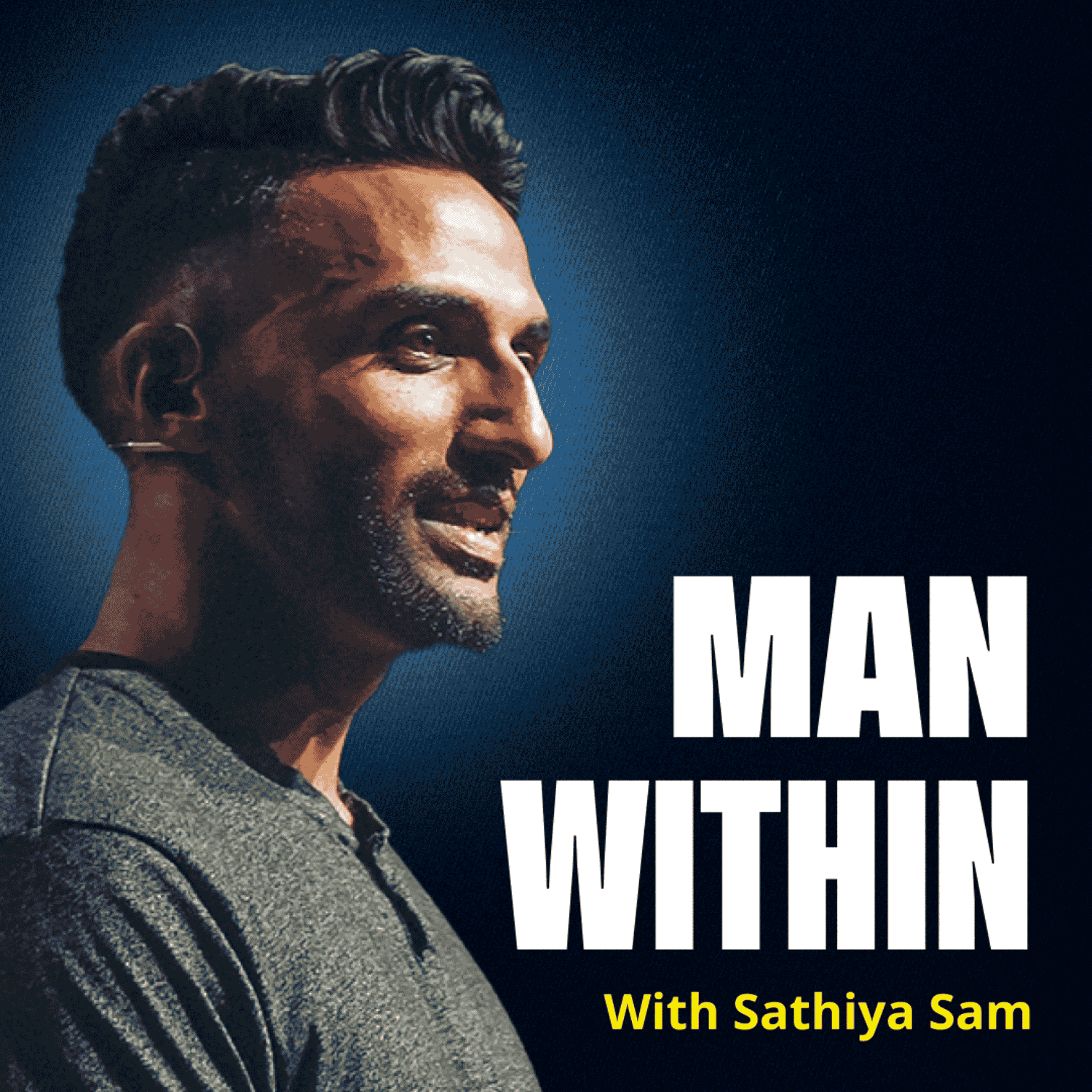
Man Within Podcast
Sathiya Sam
Wild at Heart
John Eldredge
Transforming Trauma
The Complex Trauma Training Center
SheRecovery Podcast with Crystal Renaud Day
Crystal Renaud Day
United? We Pray
United? We Pray
Bare Marriage
Sheila Gregoire
Raising Boys & Girls
That Sounds Fun Network
Return to Heart
Tin Man Ministries